
Right after an injury such as a stroke, we see an area of the brain that has damaged / dead neurons, surrounded by a penumbra for healthy neurons surrounding it.
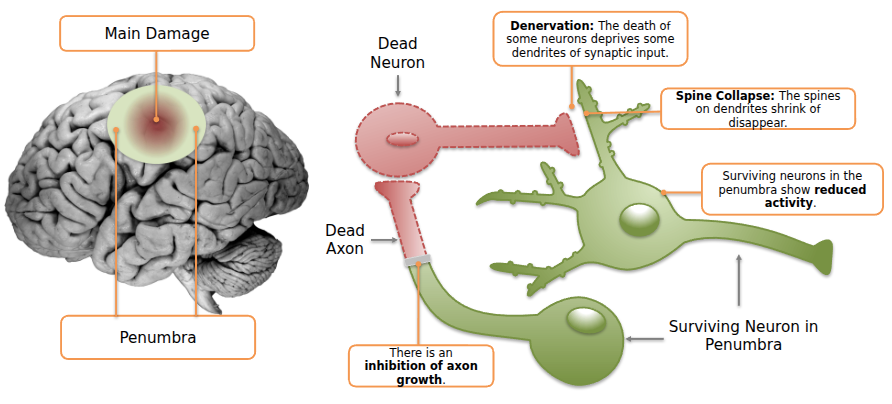
The damage causes all of the above^^
Spontaneous Recovery
These are all the processes involved in recovery.
Initial Events
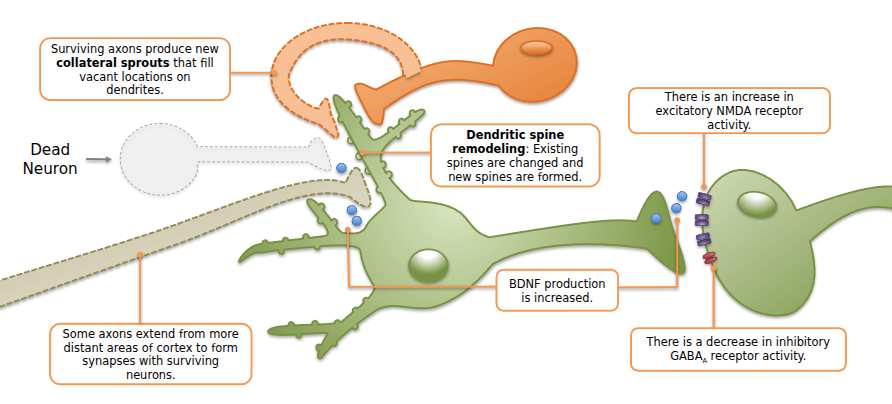
BDNF is up-regulated which causes an increase in synaptogenesis.
Network Reorganization
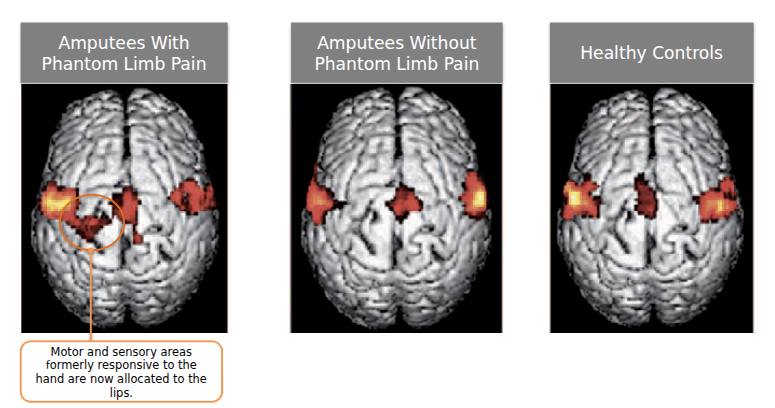
Neurons reorganize their roles to adapt to the loss of neurons of a particular responsibility.
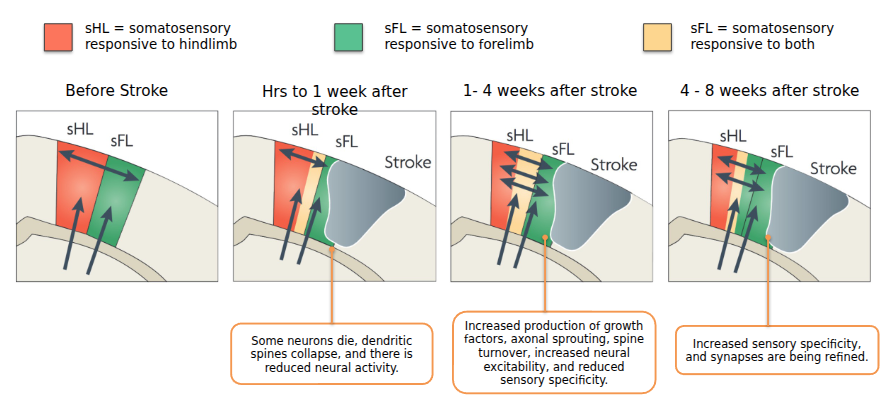
This can also happen across the left and right hemispheres.
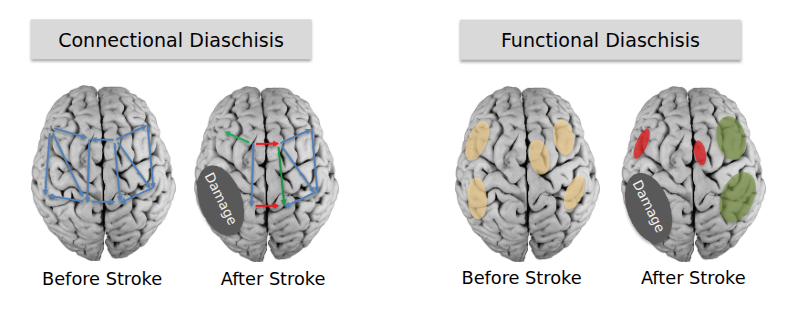
Diaschisis
Reduce connectivity or activity from damage.
Connectional Diaschisis
These are neuronal connections that become weaker after damage.
Functional Diaschisis
These are neuronal brain areas that show less activity after damage.
Phantom Limbs
People with Phantom Limb pain can be used to study [network reoganization](## Network Reorganization)
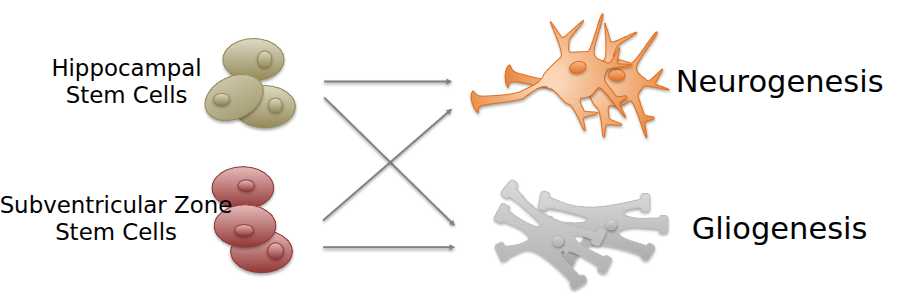
Cell Genesis
New cell production can also be part of the recovery process. Mostly studied from rats and mice.
Drug Therapies
Many drug therapies have not been very successful due to unwanted side effects. The only one that is promising is
Tissue Plasminogen Activator (tPA)
Used to dissolve clots. Successful if administered within 3 hours. (up to 4.5 hrs in certain patients.)
Training-induced Recovery
Has shown to be effective for brain healing.
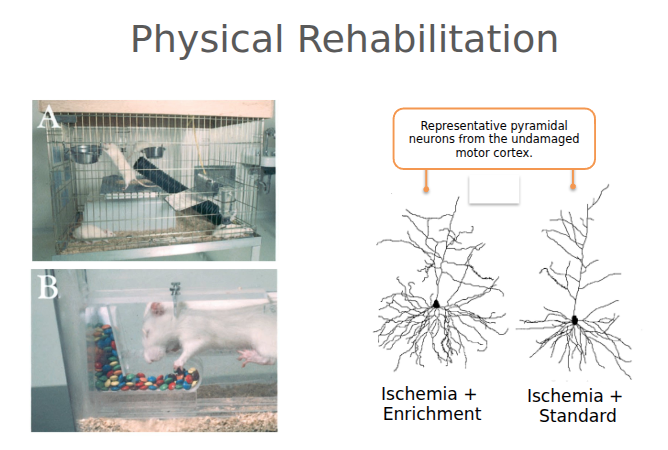
Rats that were given an enriched environment recovered better than those in a secluded environment.
Stem Cell Therapy
Introduction of stem cells into a post-stroke brain. Has shown promise in some animal models.
Injection of bone marrow stem cells into rats has shown recovery. There has also been some experiments with humans, and has shown promise.
Still under active research.
Brain Stimulation
Applying Transcranial Direct Current Stimulation and Transcranial Magnetic Stimulation (TMS) have helped.
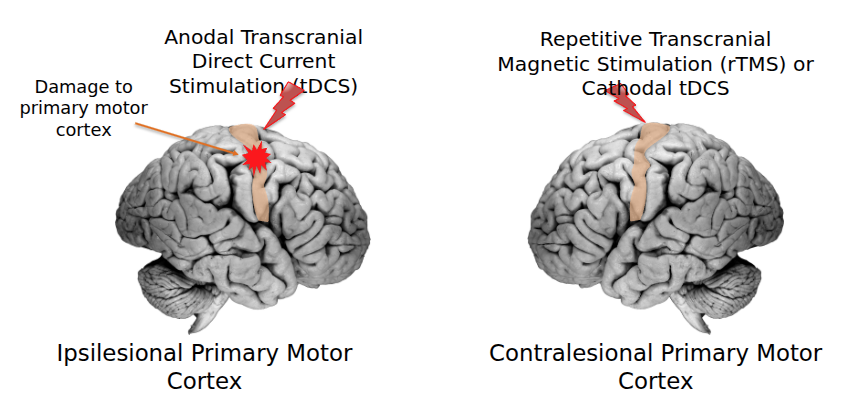
IMPORTANT You are trying to heal the lesioned area by increasing the excitability of the lesioned area, OROROROR by DECREASING the excitability of the unlesioned counterpart (Contralesional).
Remember:
- Anodal tDCS increase excitability
- Cathodal tDCS decreases excitability
- rTMS decreases excitability