
Various forms of brain injuries.
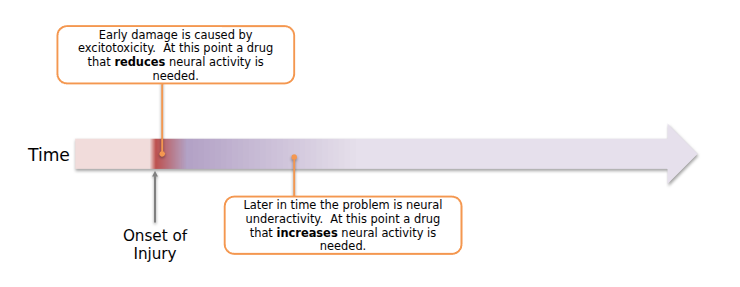
Brain injury follows this sort of timeline.
Cerebrovascular Accident (Stroke)
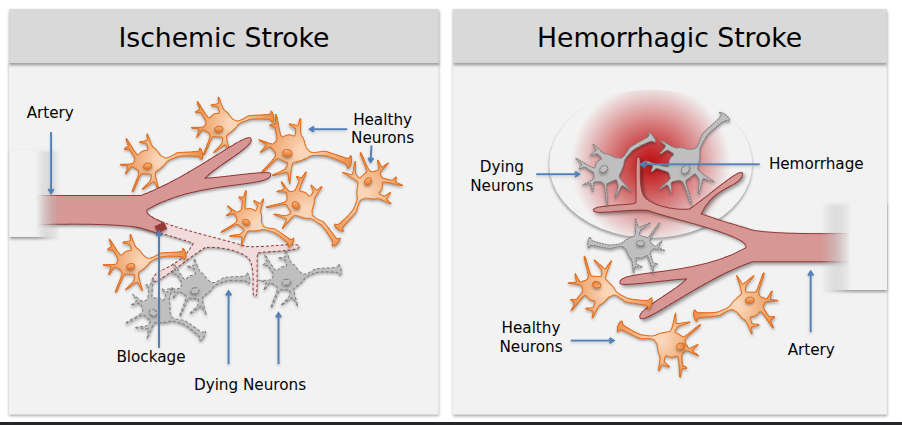
There are two types of strokes.
- Ischemic Stroke involves a blockage in the blood vessel in the brain (most common)
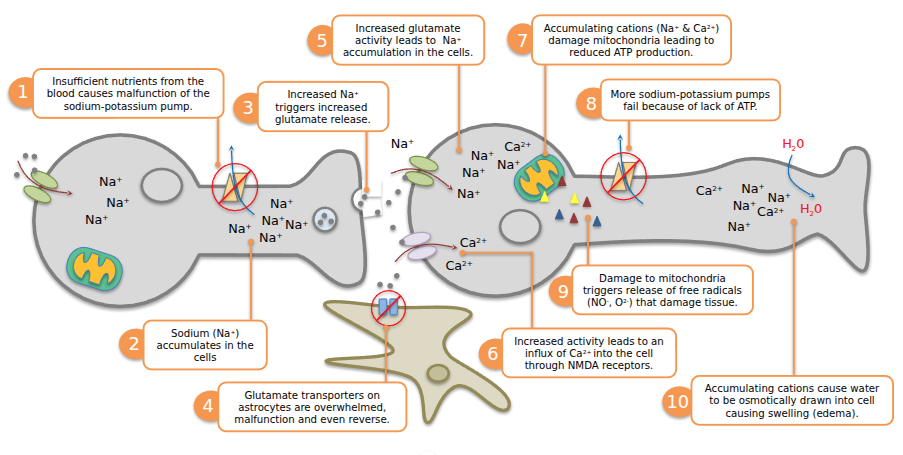
- Cell death of this kind of stroke is due to over-activity. Also known as excitotoxicity
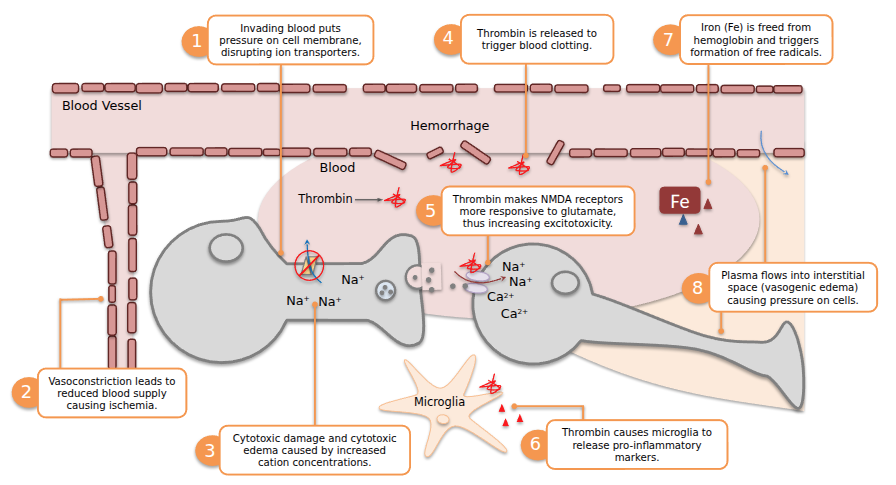
- Hemorrhagic Stroke (AKA Intracerebral Hemmorrhage (ICH)) involves the rupture of a blood vessel in the brain.
- Large bleed can also cause a blood mass in the brain known as a hematoma
- 40% of this kind of stroke leads to death
Excitotoxicity (Cytotoxic Edema)
This is mainly prevalent for Ichemic Strokes
Additional Mechanisms of Hemorrhagic Stroke
Traumatic Brain Injury (TBI)
Results from external forces, and can be caused by:
- direct impact
- rapid acceleration or deceleration
- penetrating object
- explosions or blast waves
Rapid Deceleration
Most common for people doing sports
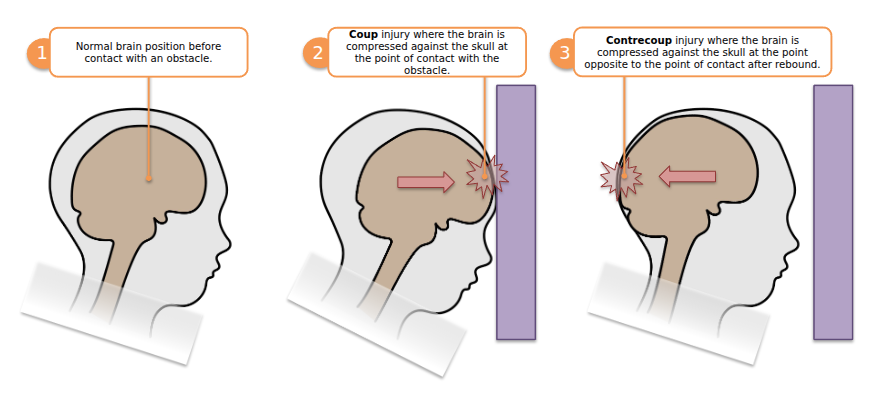
Can lead to:
- Hematoma which is a blood mass in the coup or contrecoup
- Contusion which is a bruise in the areas, small tears in the blood vessels
- Diffuse Axonal Injury from axonal sheering
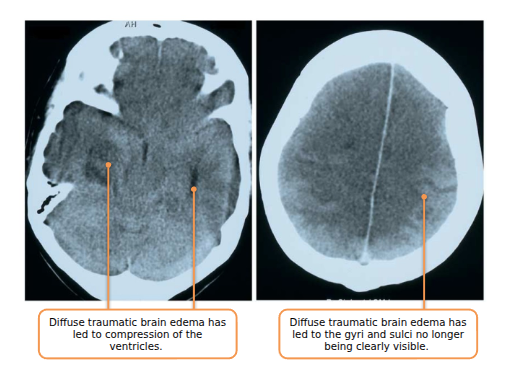
Swelling (aka. Edema) can also occur Can either be cytotoxic edema or vasogenic edema (swelling caused by breakdown of the blood-brain barrier)
It can occur throughout the brain, which is called diffuse traumatic brain edema.
Concussion
A form of acute TBI. Can witness:
- headache
- nausea
- dizziness
- memory and attention problems
Chronic Traumatic Brain Injury
Can be caused by repeated impacts, leading to things like:
- alzheimer’s symptoms
- parksinsonian symtoms
- motor problems
- mood disturbances
- impaired cognition